Short answer: grammar isn’t the problem anymore — tone is. AI translation tools are excellent at sentence structure, but they still gamble on how formal, casual, or blunt something should sound, and that gamble is exactly what makes writing read as human or not. It’s the one specific thing that’s stopped me from translating this whole blog from Korean instead of writing it in English myself.
A few weeks ago I wrote about the AI writing tools that help me sound less “translated” when I write in English. A few people asked, reasonably, why I don’t just skip that problem entirely and translate with AI instead. I’ve tried it. Here’s why I still don’t, for most of this site.
“Translate the following text into natural, idiomatic English. Keep the tone casual and clear, as if explaining it to a close colleague. Avoid stiff, overly formal phrasing or literal word-for-word translation: [paste text]”
The one thing it gets wrong
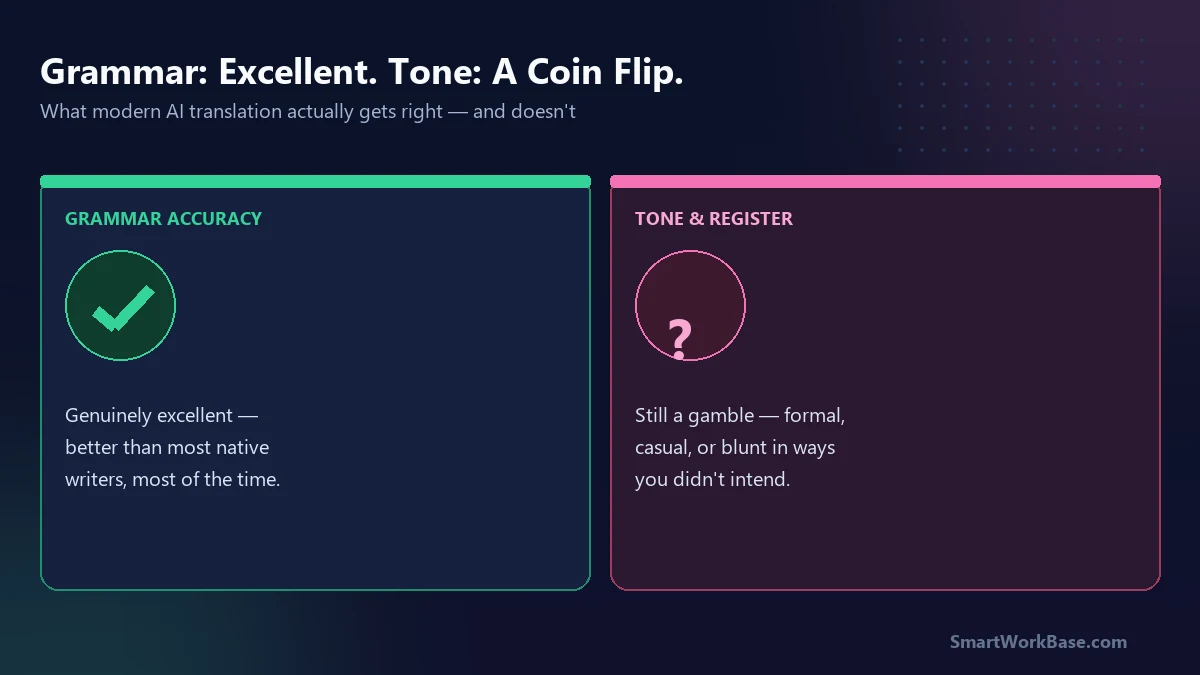
It’s not grammar. Modern translation tools are genuinely excellent at grammar, way better than my own English grammar half the time. What they still get wrong, consistently, is register — how formal, how casual, how hedged a sentence should sound in a specific context, especially when that context depends on cultural assumptions that don’t map cleanly between Korean and English.
A simple example: a Korean sentence that’s politely indirect — softening a disagreement, hedging a recommendation — gets translated into English that sounds either stiffly formal or, just as often, blunt in a way I never intended. The words are correct. The tone is a coin flip. And tone is most of what makes a blog post, or an email, or a comment reply sound like it came from an actual person instead of a script.
Where I do trust it completely
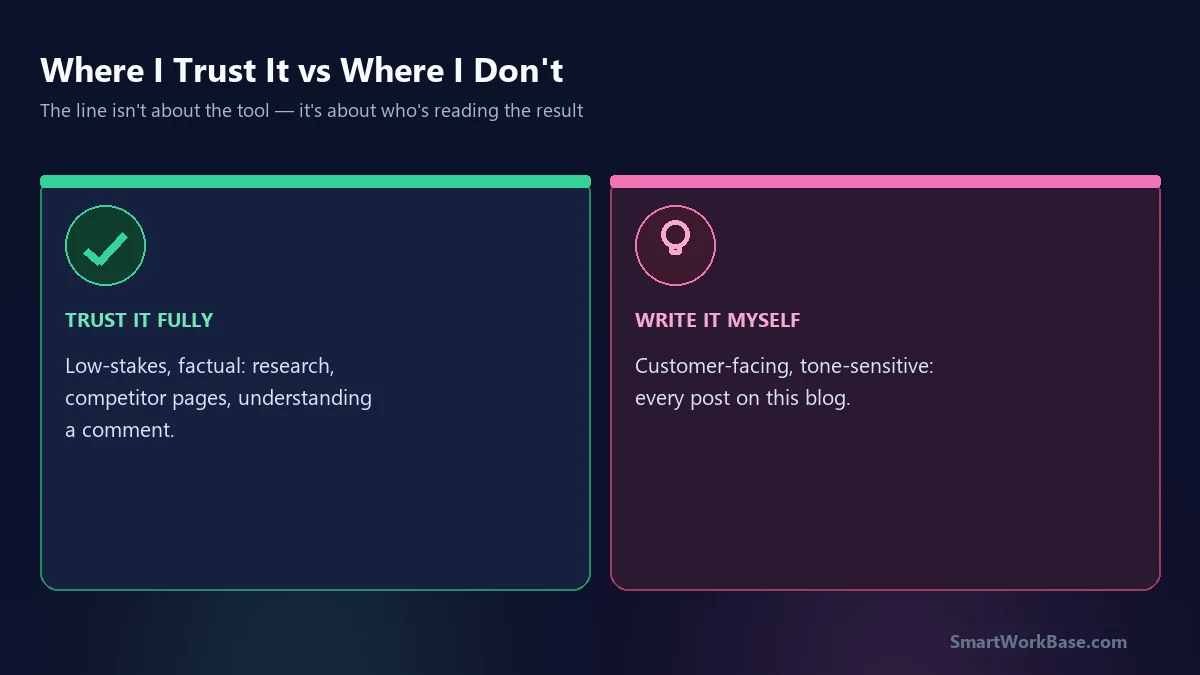
For anything factual and low-stakes on tone, AI translation is genuinely great and I use it constantly. Reading a source article in Korean for research, checking what a competitor’s Japanese-language landing page says, understanding a comment from a non-English reader — DeepL handles all of that well, fast, for free. I’m not anti-AI-translation. I’m specific about where the risk actually is.
Why I still write this blog myself
Every post on this site is customer-facing — it’s the thing a stranger reads and decides, in about four seconds, whether to trust. That’s exactly the situation where a wrong-register sentence costs the most and is hardest to notice, because it reads as grammatically fine. You don’t get an error message. You just get a slightly weird post that nobody can quite explain why they bounced from.
So my actual rule is boring but it works: write it myself first, in English, however clumsy, then use the writing tools I’ve already covered on this site to fix the sentences that sound translated — instead of translating from Korean and hoping the tone survives the trip. It’s slower. It’s also the version where I still recognize my own voice in the result.
(This is a direct follow-up to the AI writing tools post — read that one first if you’re wondering what “sounds translated” actually means in practice.)