Here is the direct verdict up front: if your task involves drafting delicate workplace emails, client memos, or anything where subtle tone matters, Claude 3.5 Sonnet is the only model I trust on a first draft. If you are solving complex formulas, Python data cleaning, or structured macros, ChatGPT-4o remains king. If you need to search across 500 pages of internal PDF attachments in one go, Gemini wins on context size.
Most AI benchmark comparisons compare technical specs, token throughput, or coding puzzles. That tells you almost nothing about what happens when you need to send an email to a difficult vendor on a Tuesday afternoon. Here is what happened when I gave all three models the exact same high-stakes business task.
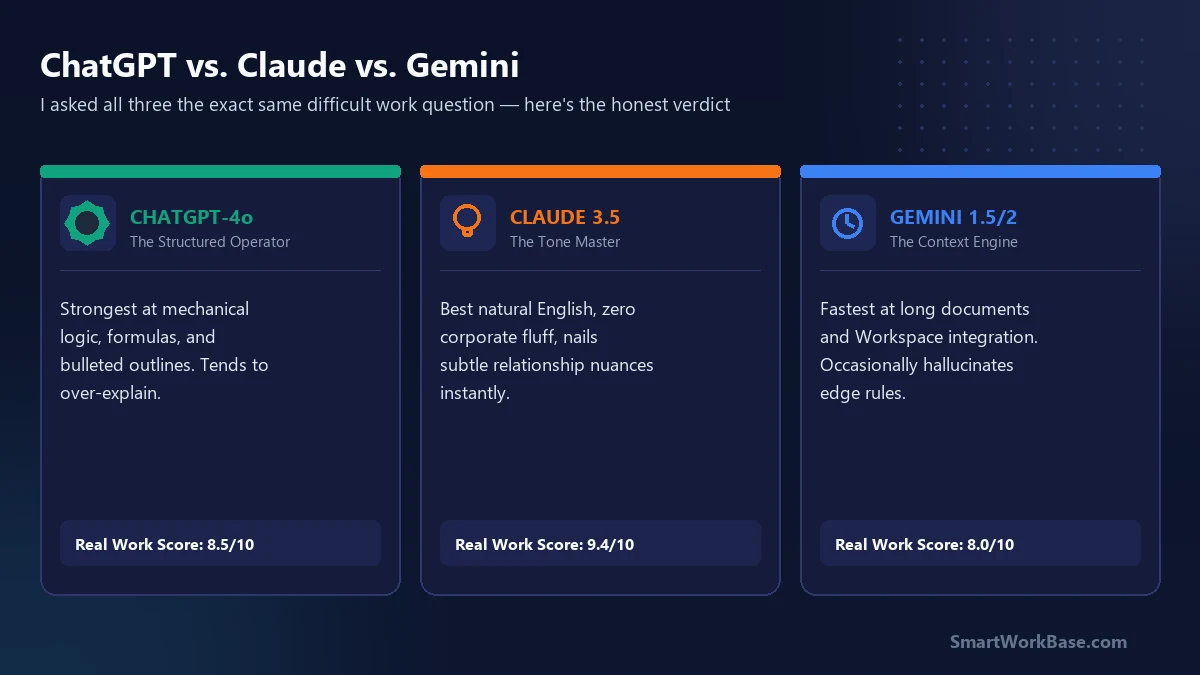
The Test: A delicate supplier price negotiation
I gave all three chatbots the exact same prompt based on a recurring scenario in my supply chain operations role: a critical long-term supplier just emailed demanding an unscheduled 14% price hike due to freight costs, and I needed to push back firmly without damaging the ten-year relationship.
“Here is an incoming email from our primary component vendor requesting an emergency 14% price increase effective next month. Draft a reply from a Supply Chain Director. We must decline the immediate hike, cite our locked annual volume commitment, request an itemized cost audit, but maintain a warm, collaborative tone that preserves the partnership.”
Writing this kind of email is treacherous. If you sound too aggressive, the vendor deprioritizes your shortage allocations. If you sound too soft, executive leadership rejects the draft. Here is how each tool performed:
1. Claude 3.5 Sonnet: The natural communicator
Claude nailed the register on the very first try. It opened with genuine appreciation for the supplier’s reliability during past supply disruptions, clearly anchored our position around the signed volume agreement, and framed the audit request as a joint problem-solving exercise rather than an accusation.
Total time spent editing before sending: under 90 seconds. As someone who writes in English as a second language, Claude is the only model that consistently avoids sounding like a robot trying to sound professional.
2. ChatGPT-4o: Structurally thorough, emotionally rigid
ChatGPT produced a logically flawless draft formatted with clear numbered bullet points. However, the tone felt distinctly corporate and cold. It used phrases like “Please be advised that pursuant to Section 4.2…” which immediately puts the vendor on legal defense.
Total time spent editing: roughly 6 minutes to soften the phrasing and remove robotic formatting.
3. Gemini 1.5 Pro: Fast context, inconsistent tone
Gemini was remarkably fast and pulled in great macroeconomic talking points about freight index benchmarks. However, the generated tone swung wildly between overly casual conversational filler (“Hope you’re having a great week!”) and dense academic paragraphs.
Total time spent editing: about 8 minutes of complete restructuring.
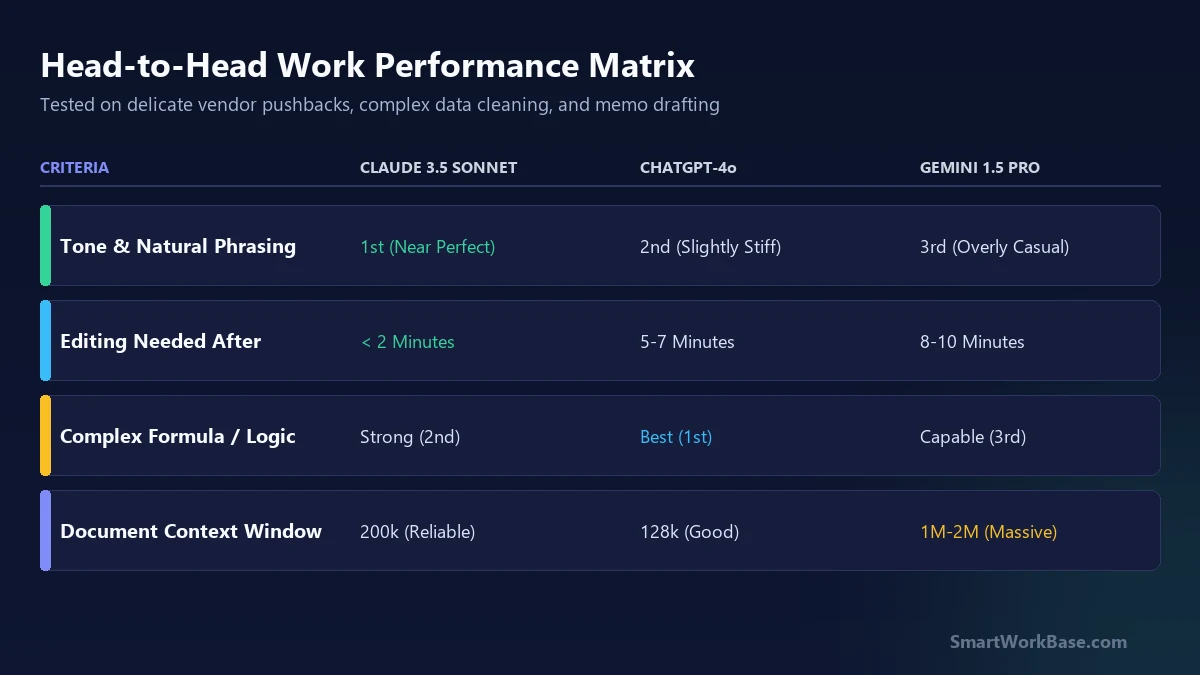
Where each model actually earns its keep
After running dozens of side-by-side experiments across real office workflows, I stopped trying to find one “master AI” to replace all others. Instead, I assign them clear operational roles:
- Claude 3.5 Sonnet is my daily writing driver: For client communications, internal memos, difficult Slack replies, and summarizing 30-page PDF reports without fluff.
- ChatGPT-4o is my technical specialist: For debugging Excel formulas, building Python data transformation scripts, and structuring messy JSON feeds.
- Gemini is my repository scanner: When I need to drop an entire folder of past quarterly review transcripts into a chat and search across them instantly.
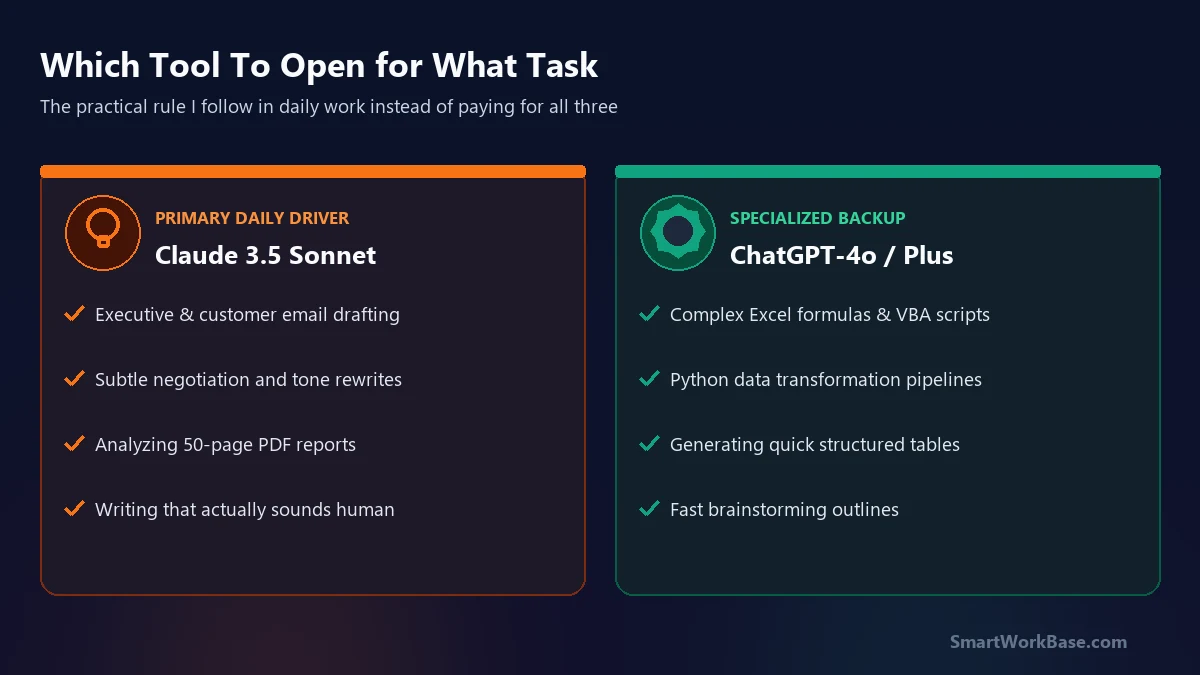
The bottom line for your daily workflow
You do not need paid subscriptions to all three services. If you spend most of your day writing, emailing, and collaborating with humans, a single Claude Pro subscription will save you dozens of hours in editing friction.
If your day revolves around spreadsheets, code, and structured analysis, ChatGPT Plus remains the safer workhorse. For quick assistance picking tools for your specific job, explore our interactive Which AI Tool Should I Use? finder or download tested prompt templates from our Free AI Prompt Cheat Sheet.
Frequently Asked Questions (FAQ)
Is Claude 3.5 Sonnet really that much better at tone than ChatGPT-4o?
Can the free tiers of these models handle these tasks?
Which tool is safer for proprietary company data?
The One Report I Still Don’t Let AI Touch in My Supply Chain Job →
The 4-question risk filter: why shortage allocation demands human accountability over algorithmic math.