The AI Workflow Stress Test: How to Audit Your Daily Automations Before They Break in Production
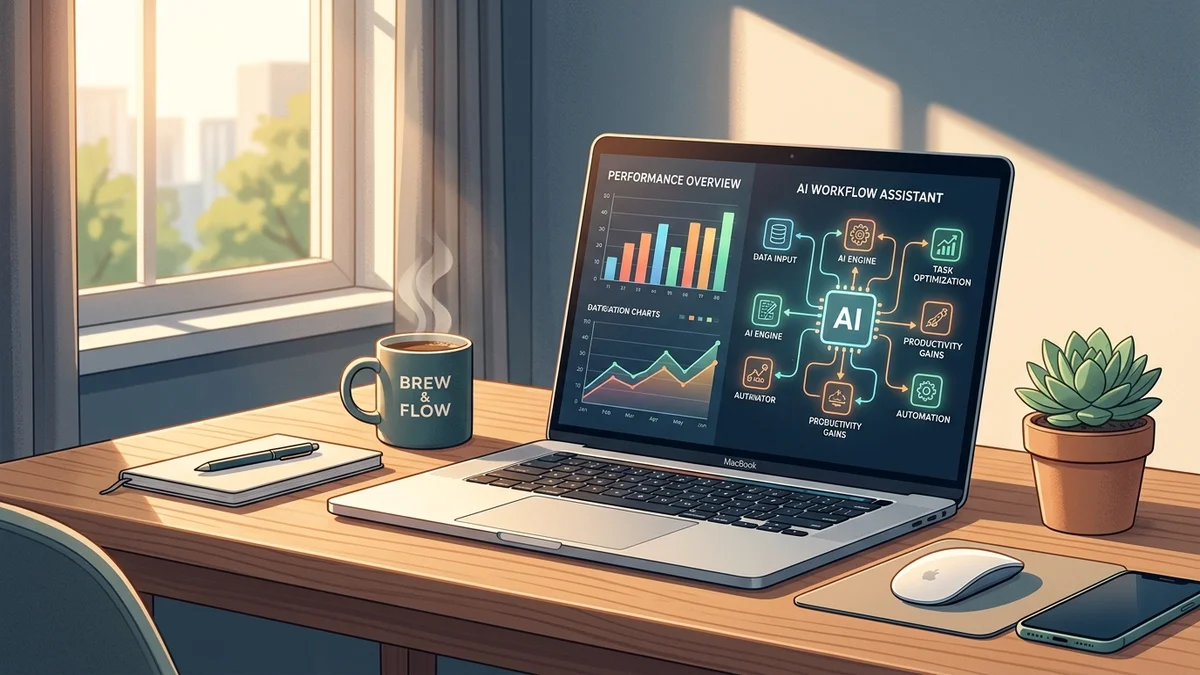
Modern editorial illustration: sleek laptop showing AI workflow assistant diagram and automation performance charts

TL;DR: Building an AI automation is easy; keeping it from silently breaking three weeks later is where 80% of workflows hit a brick wall. When an automated workflow fails, it rarely throws a clear error message—it quietly drops rows, loops endlessly on expired credentials, or sends unreviewed hallucinations to your executive team. Before deploying any … 더 읽기
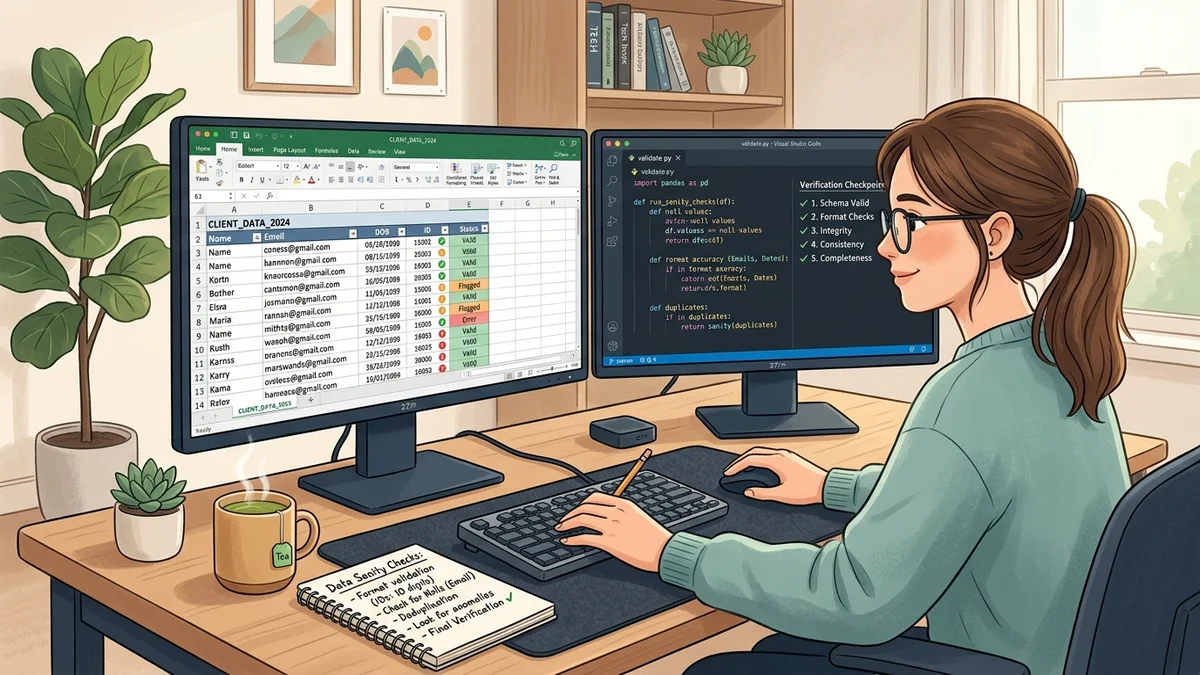
Aside on Windows: 4 Native Desktop Features That Make AI Web Automation Actually Delightful

Modern editorial illustration: dual-monitor desk setup with spreadsheet data sanity and Python verification checkpoints

TL;DR: After weeks of dissecting automation risks and warning about edge-case failures, it’s time for some good news: Aside on Windows is genuinely fun to use. Unlike early web bots that hijacked your mouse or trapped you in clunky terminal windows, the Windows build feels like an organic extension of your dual-monitor setup. Between background … 더 읽기

The 3 AI Prompts I Actually Run Every Morning (And the 5 I Banned)

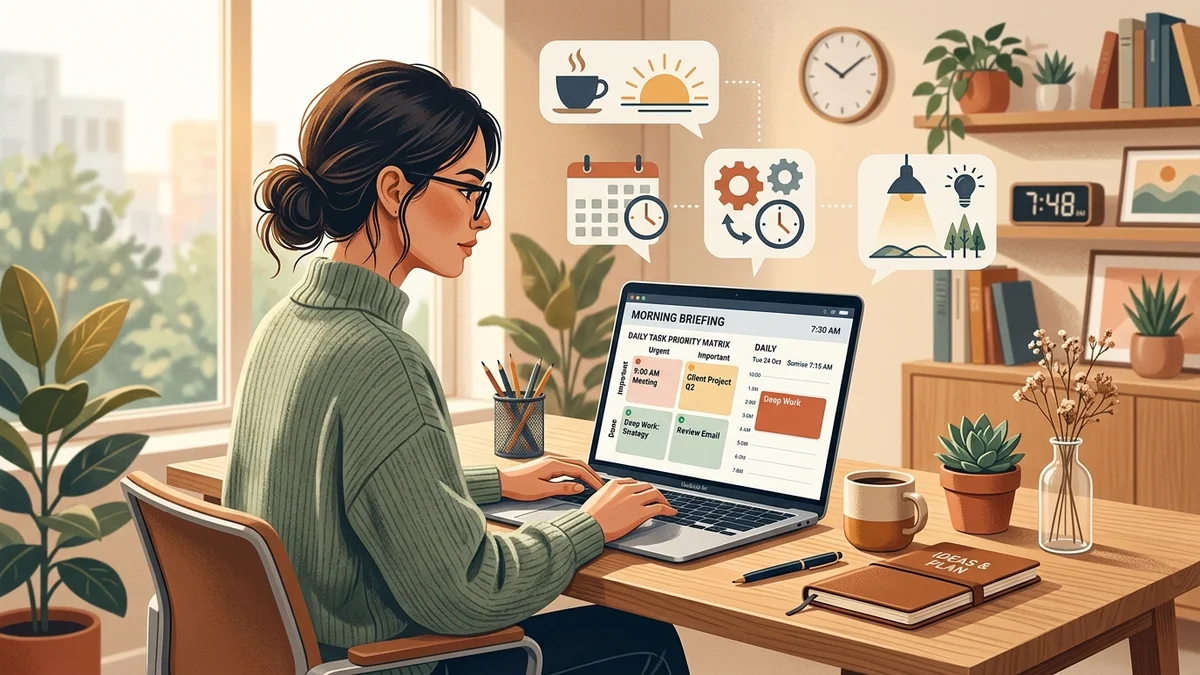
Modern editorial illustration: knowledge worker at wooden desk with morning coffee, reviewing AI morning briefing and task matrix on laptop

TL;DR: Most morning AI prompts are productivity theater. They don’t save time; they steal it. After two years of daily prompting experiments, I’ve permanently banned 90% of popular templates from my morning routine. Today, exactly three narrow prompts survive my 7:30 AM desk habit: a 90-second calendar buffer audit, an overnight unread email triage condenser, … 더 읽기

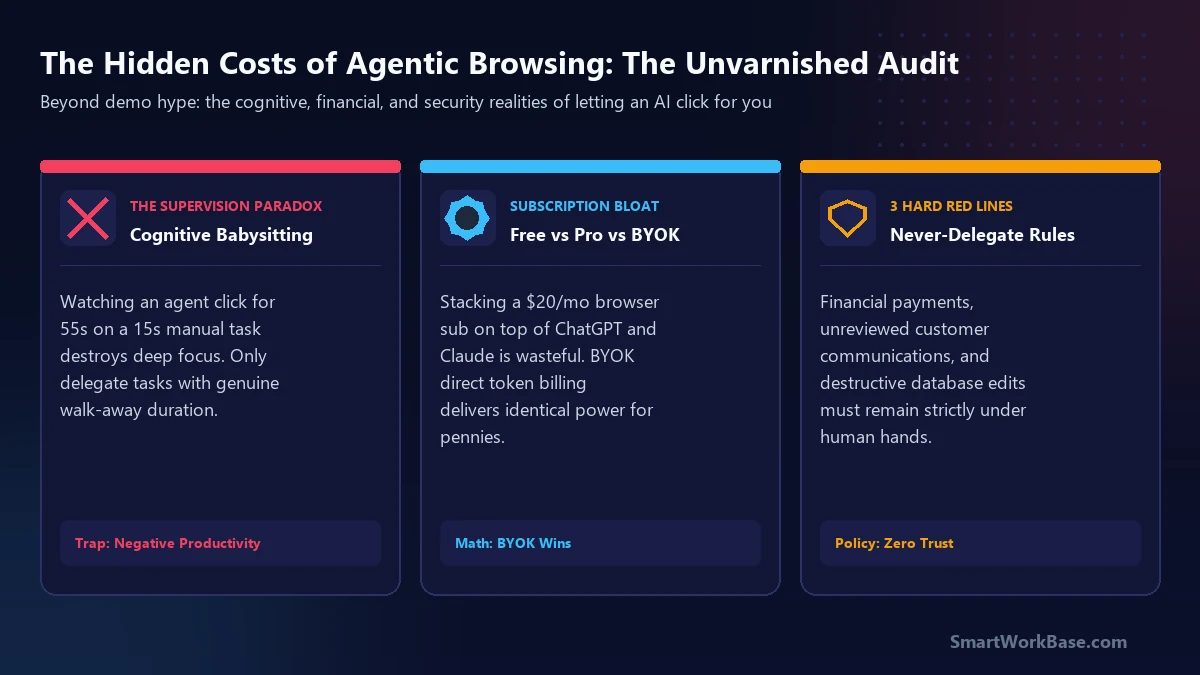
The Hidden Costs of Agentic Browsing: What Aside Got Right (And Where You Shouldn’t Trust It)

Hero card: evaluating the supervision paradox, subscription stacking, and enterprise safety red lines

TL;DR: Agentic AI browsers like Aside represent a legitimate leap beyond copy-paste chatbots, but the industry hype conceals three major operational traps: the Supervision Paradox, subscription stacking bloat, and severe compliance liabilities. If a web task takes under two minutes manually, watching an AI browser execute it step-by-step makes you slower, not faster. Furthermore, paying … 더 읽기

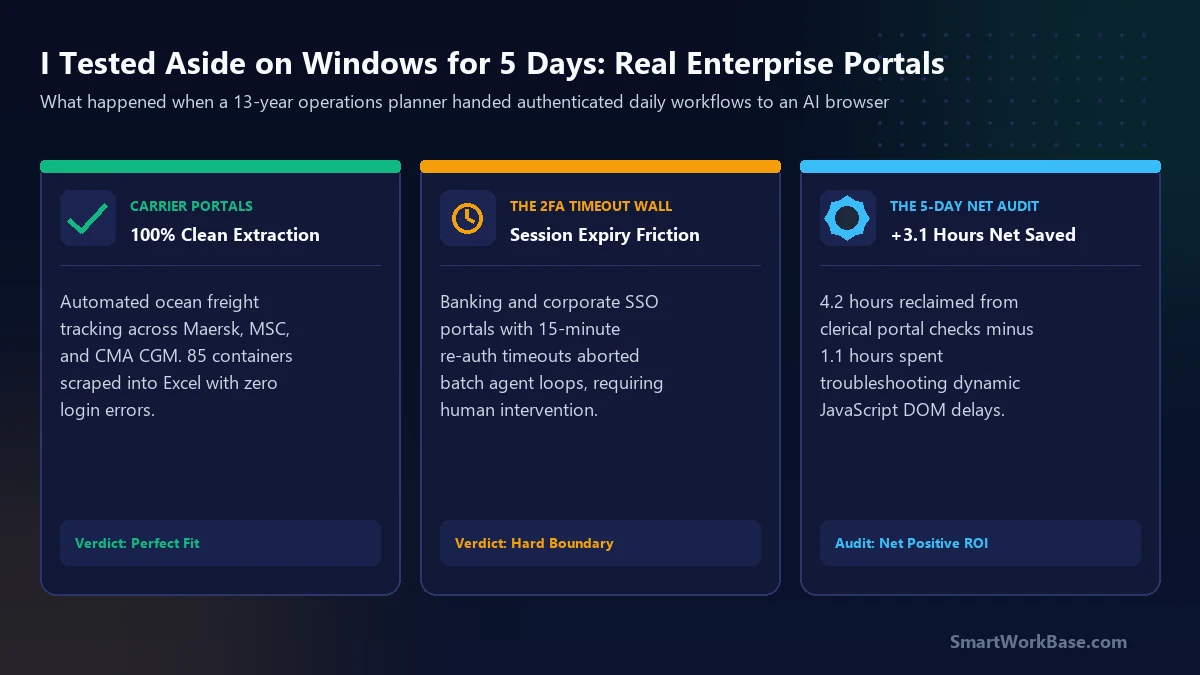
I Tested Aside on Windows for 5 Days: What Happened When I Let an AI Browser Run My Daily Portals

Hero card: 5-day field test of Aside AI browser across legacy enterprise portals and cloud ERP on Windows

TL;DR: Following our beginner guide on Aside’s $0 stack, I spent five full workdays testing Aside on a standard Windows enterprise desktop across our company’s messiest authenticated portals. Over 35 multi-step operational tasks, the agentic browser reclaimed 4.2 hours of mind-numbing data retrieval, but cost 1.1 hours in supervision and dynamic DOM troubleshooting — leaving … 더 읽기

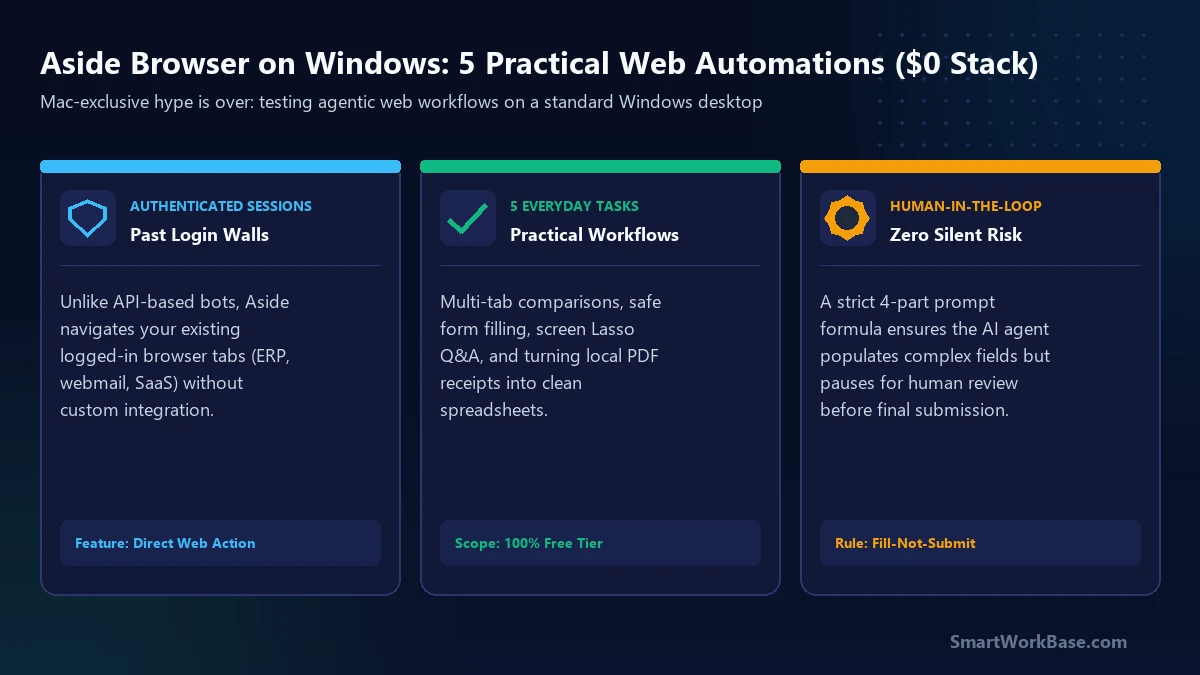
Aside Browser on Windows: 5 Practical Ways Everyday Users Can Automate Web Work ($0 Stack)

Hero card: Aside AI browser on Windows automating 5 everyday web tasks for $0

TL;DR: Agentic browsers have spent the last year trapped in Mac-exclusive demos. With Aside’s September 2026 Windows release, autonomous web automation has finally arrived on enterprise desktop PCs. Unlike traditional AI chatbots that stop cold at login screens or require fragile API webhooks, Aside navigates your authenticated tabs directly. On the $0 Free Tier (500 … 더 읽기

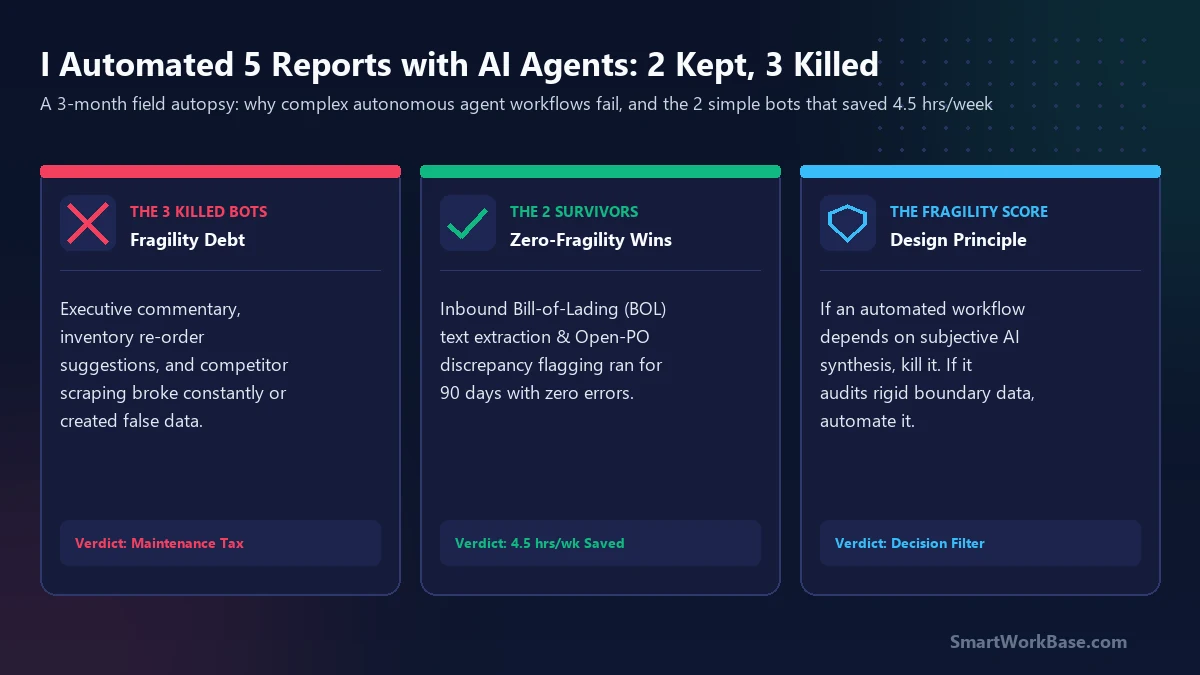
I Automated 5 Reports with AI Agents: 2 Kept, 3 Killed

Hero card: 3-month field autopsy of autonomous agent reporting workflows

TL;DR: Building autonomous AI agents to run your weekly reports sounds like the ultimate productivity victory. But three months in, the “maintenance tax” comes due: schema drifts break scripts, LLMs hallucinate explanations for sales dips, and you spend more time babysitting the automation than doing the work. After deploying five automated weekly reports using Make, … 더 읽기

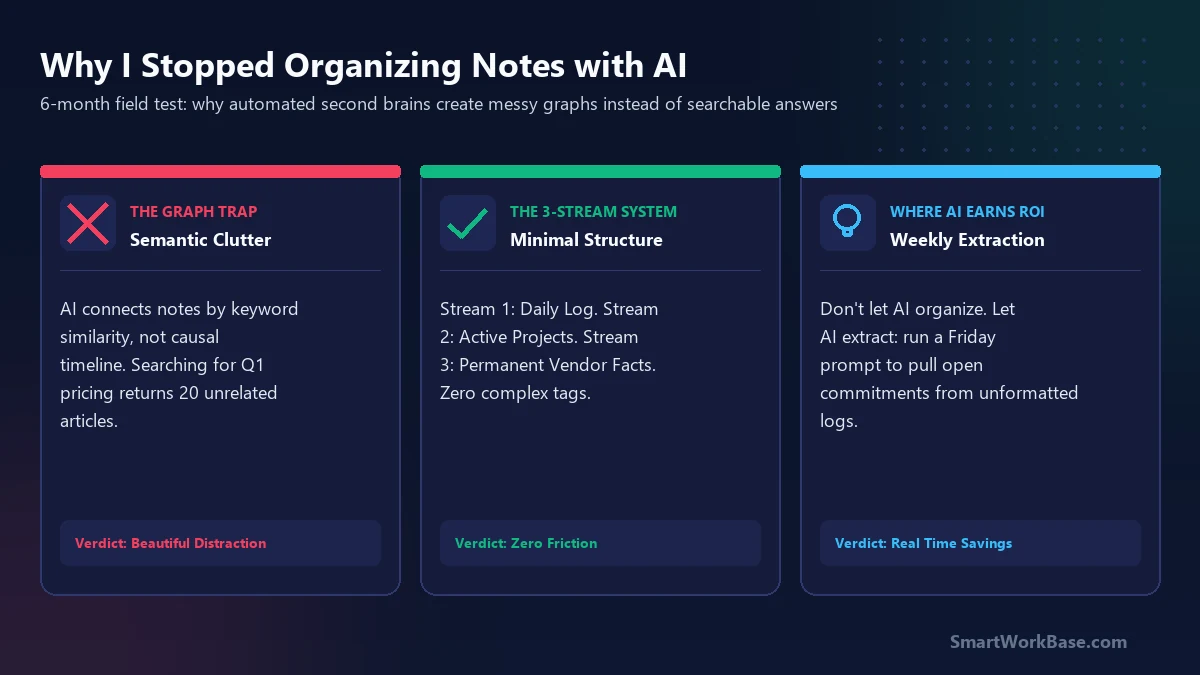
Why I Stopped Organizing My Notes with AI: The True Cost of an ‘Autonomous Second Brain’

Hero card: 6-month field test of autonomous second brains vs searchable plain text

TL;DR: Automated AI “second brain” tools promised that we could delete our note folders and let semantic algorithms connect our thoughts forever. After running an autonomous PKM setup across 2,400 work notes for six months, I abandoned the automated knowledge graph. AI connects notes by semantic similarity, but human operations run on causal timelines — … 더 읽기

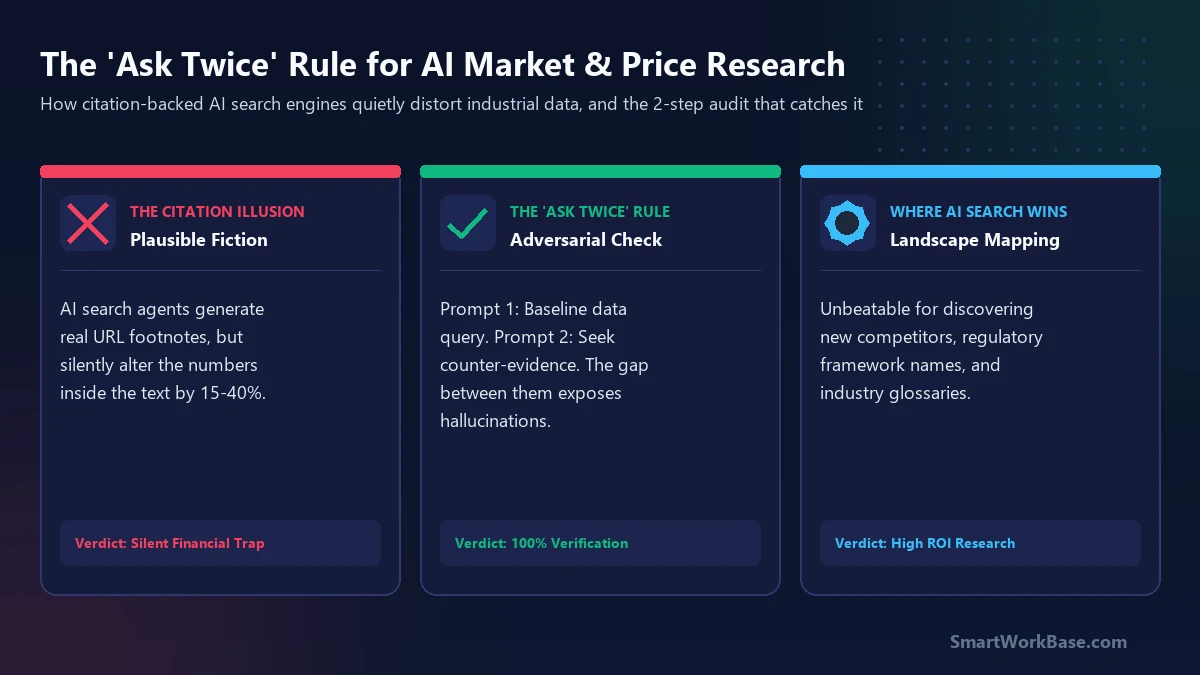
The ‘Ask Twice’ Rule: How I Catch Silent AI Hallucinations in Market & Price Research

Hero card: how citation-backed AI search engines distort industrial data and the 2-step audit

TL;DR: AI search engines like Perplexity, Genspark, and ChatGPT Search are brilliant at summarizing complex web topics with clickable footnotes. But in industrial market research and procurement, they have a dangerous blind spot: they frequently cite authentic industry URLs while quietly altering the numbers inside the text by 15% to 40%. After an AI search … 더 읽기

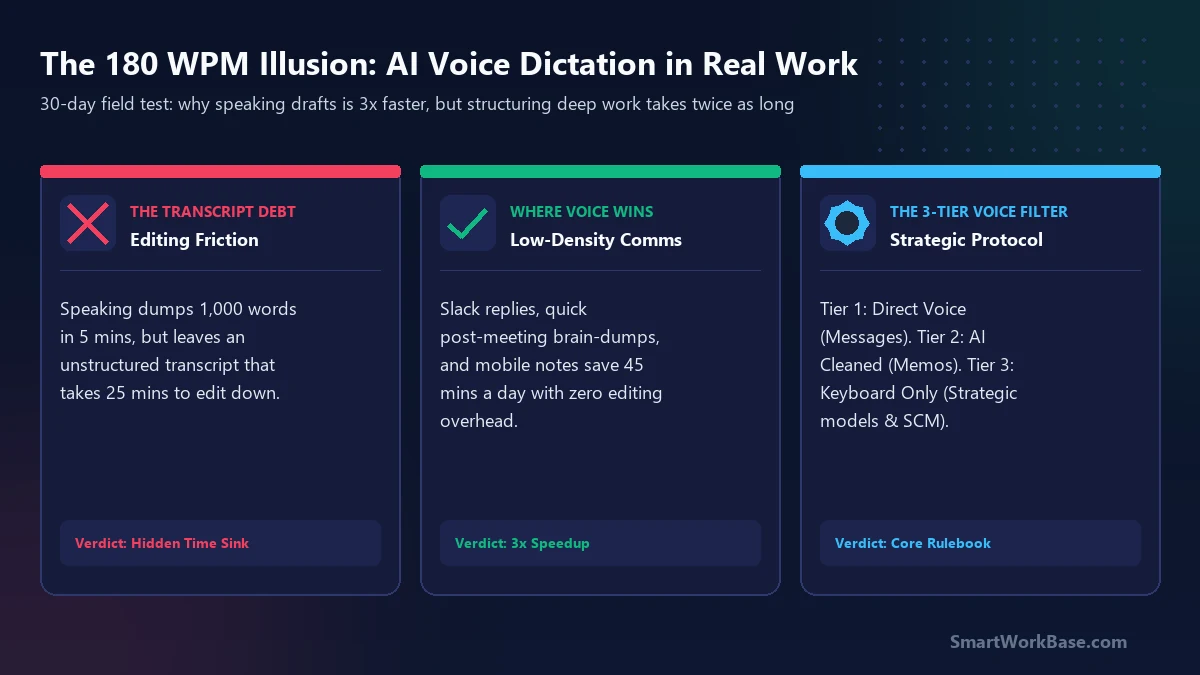
The 180 WPM Illusion: Why Talking to AI Makes My Real Work Slower, Not Faster

Hero card: why speaking drafts is 3x faster but editing transcript debt takes twice as long

TL;DR: Speaking is 3.5x faster than typing (180 WPM vs 50 WPM), but drafting is only 20% of knowledge work. After testing AI dictation tools like Wispr Flow and Superwhisper for 30 consecutive workdays, I found that dictating analytical memos created “transcript debt” — turning a 15-minute typing session into a 35-minute editing marathon. Here … 더 읽기